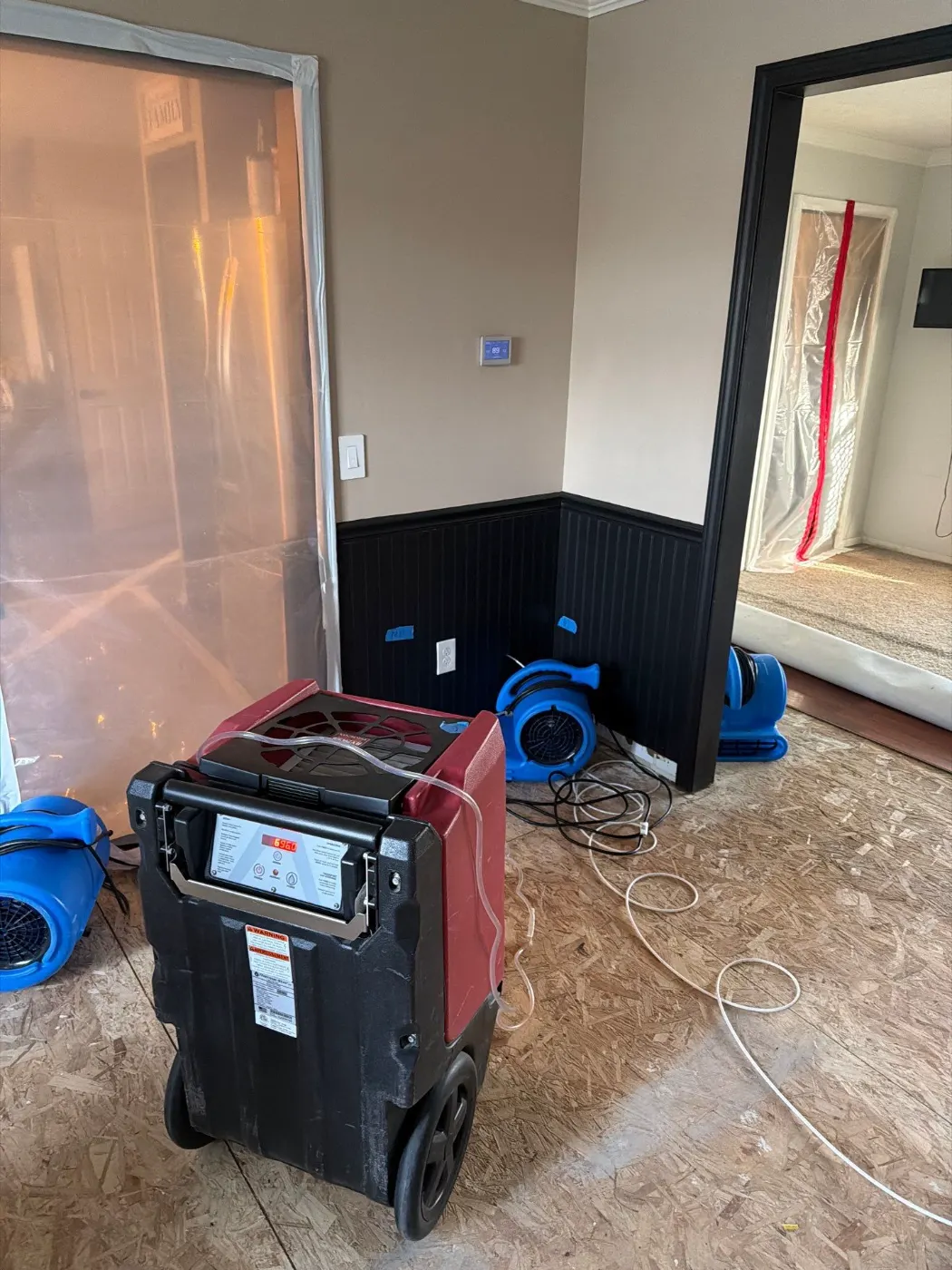
Basement Flooding in Crooked Stick, IN
Basement flooding in Crooked Stick handled end to end, from the first pump through the insulation, drywall and flooring.
Crooked Stick Water Restoration provides Basement Flooding in Crooked Stick, IN. 24/7 emergency response with IICRC certified crews, and we work with your insurance carrier on approved claims. Call (317) 342-7736 for immediate dispatch.
- Service: Basement Flooding for Crooked Stick homeowners
- Service area: Crooked Stick, IN and surrounding areas
- Response time: Fast local response for Crooked Stick; live dispatch every hour of the year
- Licensed and insured (License #RC21100059)
- Serving Crooked Stick, IN since 2018
Basement Flooding Cleanup in Crooked Stick
We handle basement flooding cleanup throughout Crooked Stick, from standing water on the slab to drywall that's wicking it up.
Basements Here
Plenty of Crooked Stick homes went up between the 1970s and the 1990s, and finished basements are common.
Where the Water Comes From
Many basements here depend on a sump pump to stay dry, so a pump that quits during a storm can flood the space fast. In heavy storms, sewer water can also back up through floor drains, and that turns the job into sewage cleanup.
Our crews work all over Crooked Stick, from Crooked Stick West to the streets near Springmill Road and Crooked Stick Golf Club. We also clean up flooded basements in Fishers, Westfield, Zionsville and Village of West Clay.
Expert Basement Flooding for Crooked Stick Homeowners
Your Crooked Stick basement stayed dry for years, which makes the first flood hard to read. A rain heavier than the yard and the footing drains were built for can overwhelm a house with no history of leaks, and the water goes into materials that have never had to dry out. Crooked Stick Water Restoration documents the source and dries the structure from the readings.
Concrete can't be read on a wood scale, so Crooked Stick Water Restoration takes slab readings by comparison. The crew measures a part of your Crooked Stick basement the water never reached and uses that spot as the reference, then checks the wet areas against it. Wood and drywall get their own readings, and the dry target for each material comes from the same house.
Wall cavities in a finished basement get dried through the assembly when Crooked Stick Water Restoration runs the job. Small holes behind the baseboard or at the bottom plate let a cavity drying system push conditioned air into the bay, which pulls moisture off the back of the drywall and out of the framing, so the whole wall doesn't have to come apart. Readings at the bottom plate tell the crew when the hoses come out.
Contents are their own piece of a basement claim and they're easy to lose track of in the cleanup. Crooked Stick Water Restoration photographs what was on the floor, lists what came out of the house, and notes what the water reached on each item before it moves. If you decide to file a claim for your belongings, the inventory and photos come straight out of the job file.
The call takes a couple of minutes and the dispatch window is two hours at any hour. Tell Crooked Stick Water Restoration what you're seeing in the basement, where the water seems to be coming in, and what's stored on the floor down there. A crew comes out, reads the space, and gives you a written scope before anything gets cut open.
Signs You Need Basement Flooding Cleanup
If you notice any of these in your Crooked Stick home, schedule a free inspection before the issue worsens.
Carpet that squishes underfoot along the perimeter while the middle of the room still feels dry
Hardwood on the floor above the basement cupping or crowning along the board edges
Laminate or engineered flooring cupping, with seams lifting in the middle of a plank run
Your water heater is leaking at the base, with water spreading across the Crooked Stick basement floor
A crack in the slab or the wall that stays wet when everything around it has dried
Steel support columns in your Crooked Stick basement rusting at the base where they meet the slab
The sump discharge line frozen or plugged, with water puddling at the foundation where it exits
Dark speckling on the paper face of the drywall near the floor, or on the back of a box
A wet base around the furnace or water heater, or a damp burner compartment
Batt insulation sagging out of the stud bays, darker and heavier along the bottom edge
How Crooked Stick Water Restoration Handles Basement Flooding
We follow these steps in order on every Crooked Stick job.
Drying Chamber Setup
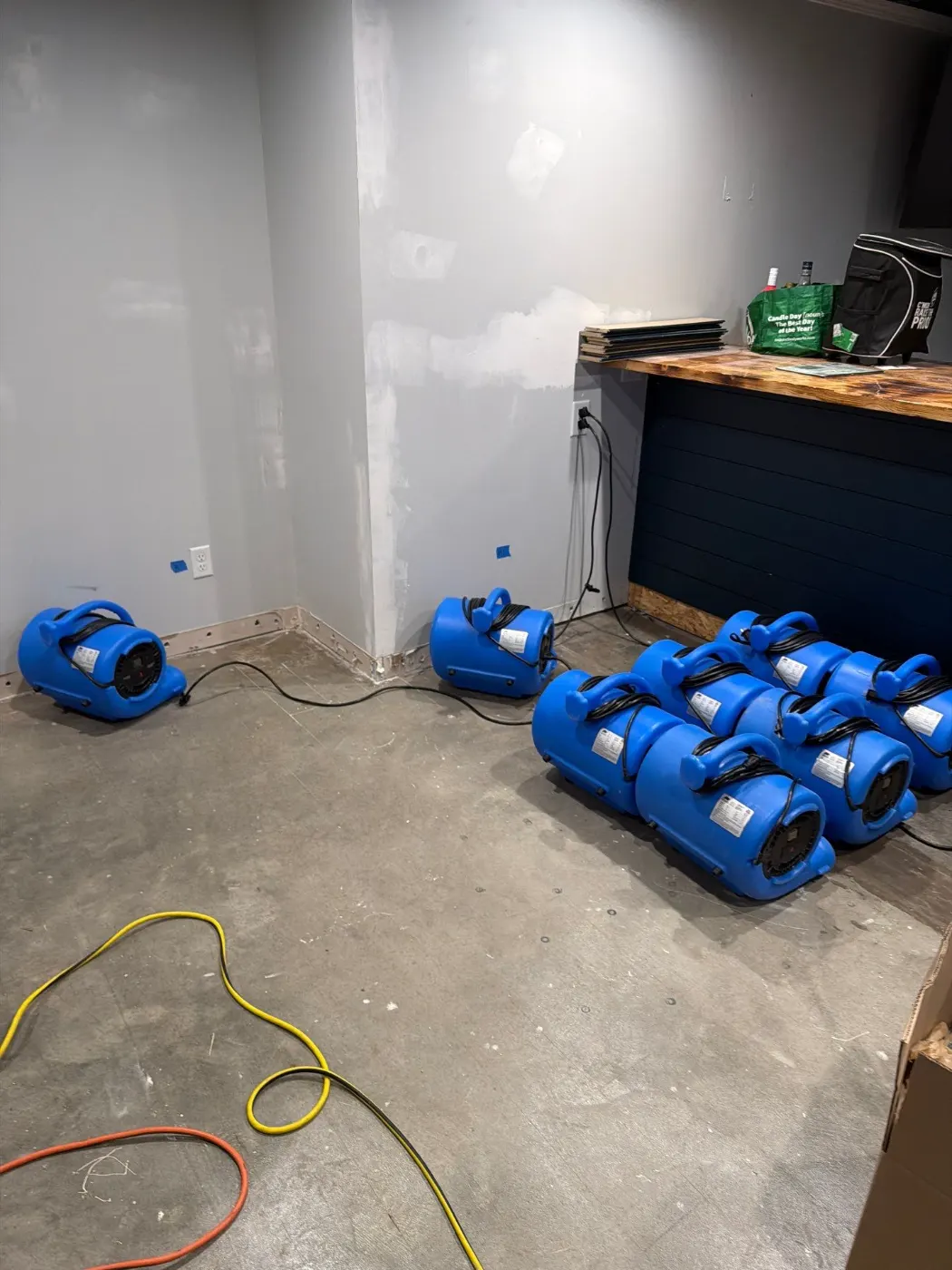
Dehumidification gets sized to the cubic footage of a closed space and air movers get placed to sweep the wet surfaces. The basement stays closed while it dries, since outside air in humid weather adds moisture to a cool space with masonry walls.
Wall Cavity Drying
Small holes behind the baseboard let conditioned air flow into the stud bays of a finished wall in your Crooked Stick home. That pulls moisture off the back of the drywall and out of the framing, so more of the wall can stay in place.
Upstairs Moisture Check
The crew closes off the stairway and reads the first floor walls above the basement of your Crooked Stick home, along with the underside of the floor. Those readings show whether humidity moved up and keep the drying confined to the basement.
Daily Monitoring
A technician returns every 24 hours while drying runs, takes readings at the same marked spots, compares room humidity against the day before, and moves equipment as the wet area shrinks. Any change to the scope arrives with photos and a conversation.
Repair Planning
With the clearance readings in hand, the crew goes through what was removed and what needs to go back. You can ask about materials that handle moisture better, and the repair scope is yours to approve before any work is scheduled.
Basement Flooding in Crooked Stick
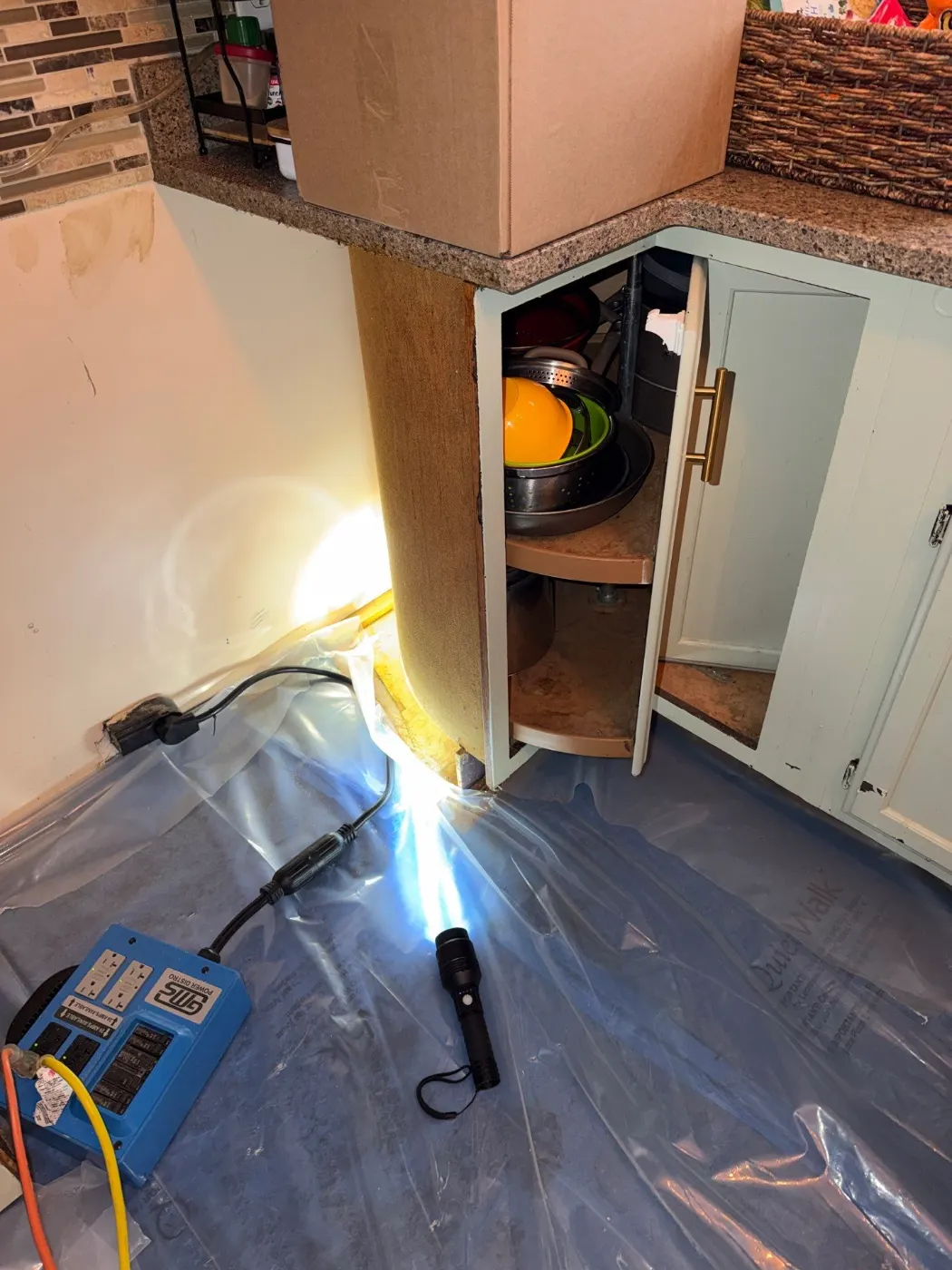
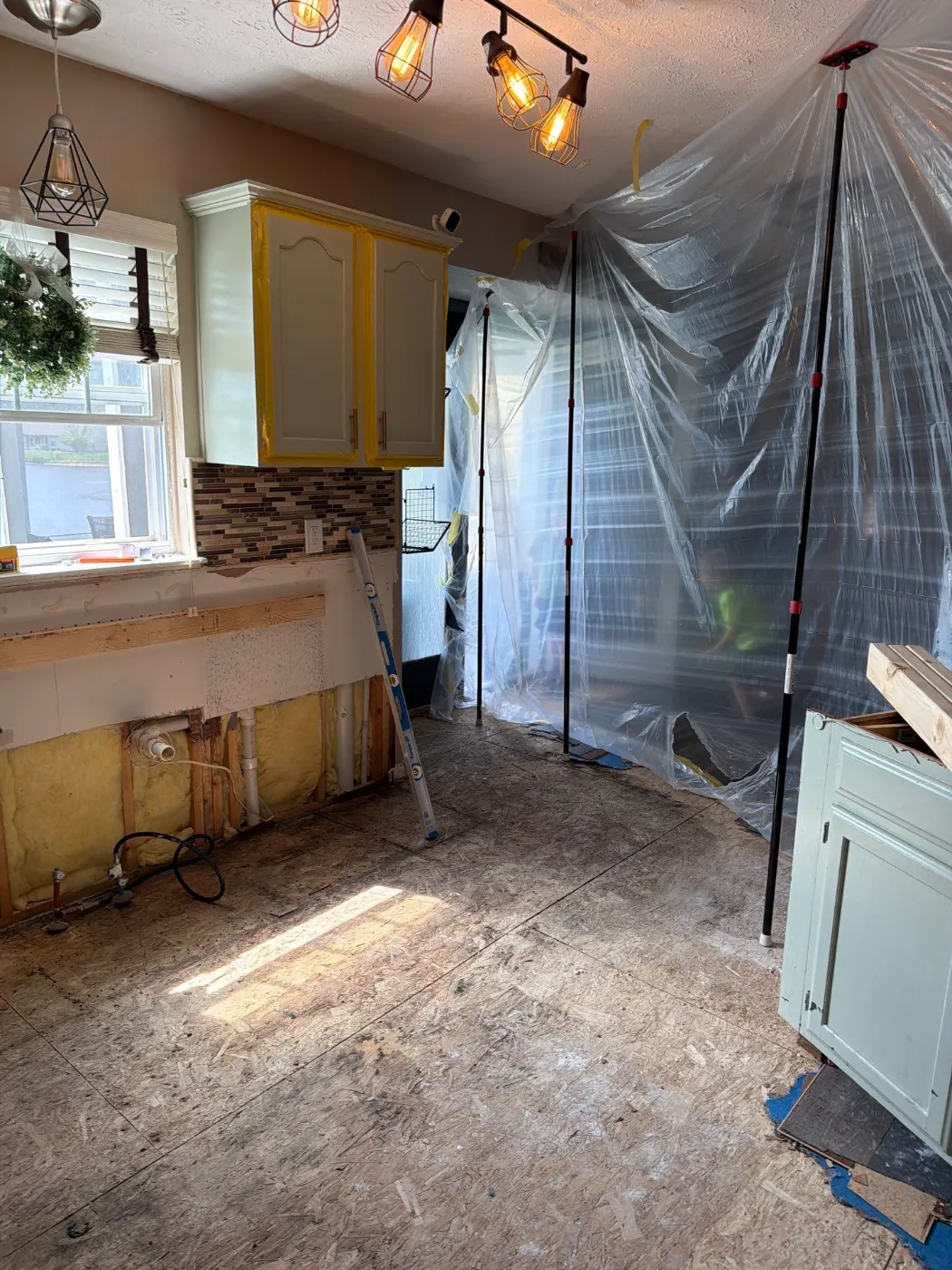
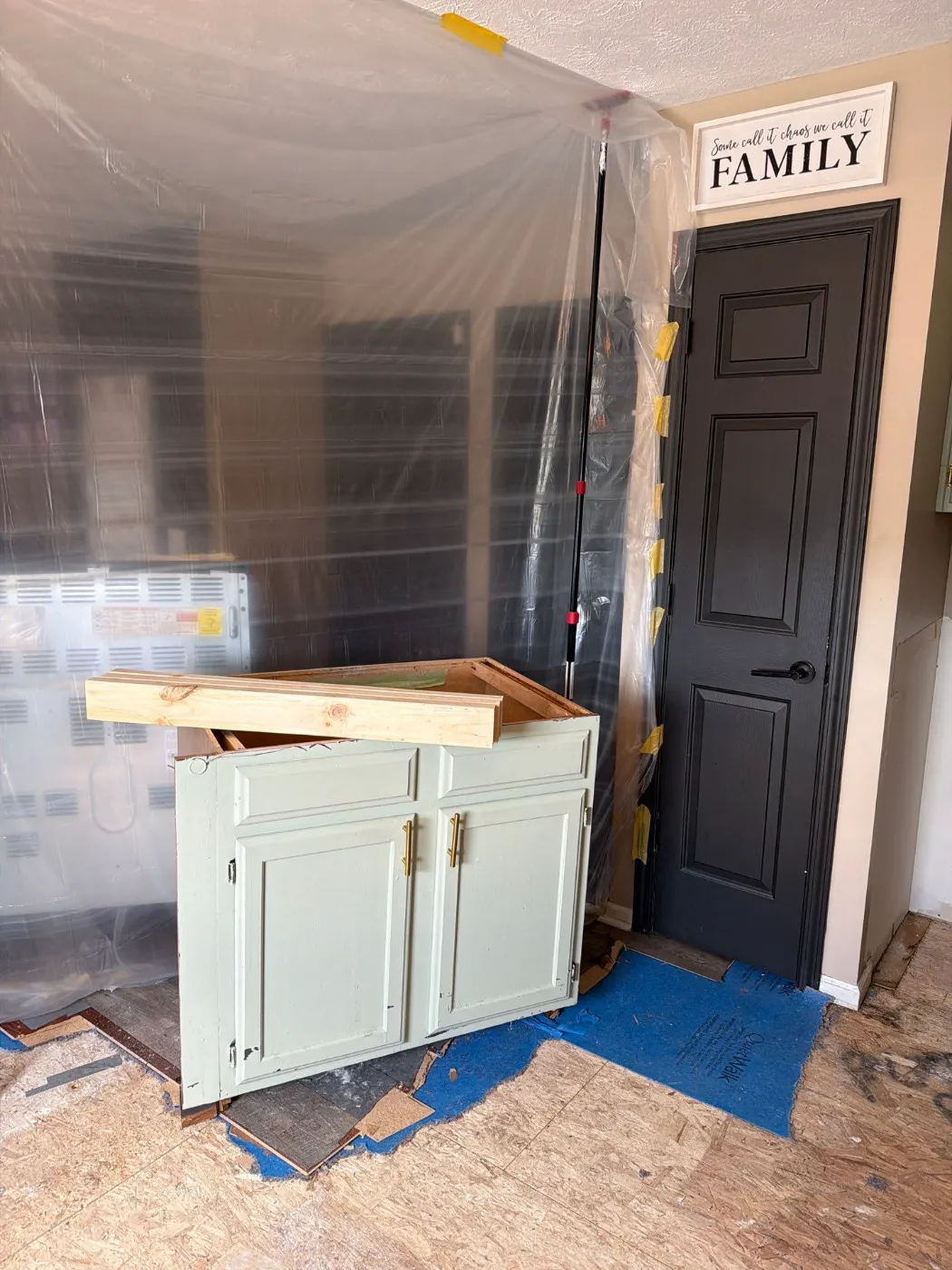
Photographs from real basement flooding jobs completed by our crew in Crooked Stick and surrounding areas.
Basement Flooding FAQ
Questions Crooked Stick homeowners ask us about basement flooding cleanup.
Guidance and Standards for Basement Flooding
- EPA advises drying water damaged areas and items within 24 to 48 hours to prevent mold growth. EPA: A Brief Guide to Mold, Moisture and Your Home
- Ready.gov notes that homeowners insurance policies don’t cover flooding, so check what your own policy says. Ready.gov: Floods
Crooked Stick Neighborhoods We Serve
We take basement flooding calls in every part of Crooked Stick. Pick your neighborhood for local details.
Other Restoration Services in Crooked Stick
Crooked Stick Water Restoration handles the full scope of restoration work. Explore our other services below.
Water Damage Restoration in Crooked Stick
24/7 emergency response. IICRC certified water restoration from extraction to full dry out.
Learn more →Sewage Cleanup in Crooked Stick
Category 3 biohazard cleanup. Full containment, decontamination, structural restoration.
Learn more →Storm Damage in Crooked Stick
Storm related water emergencies. Tarping, extraction, drying, and full restoration.
Learn more →Request Basement Flooding Cleanup
Reach Us Directly
Our team is available 24/7 for emergencies and ready to schedule inspections during business hours.
Need Immediate Help?
For active water or mold emergencies, call us directly. We are available 24/7.